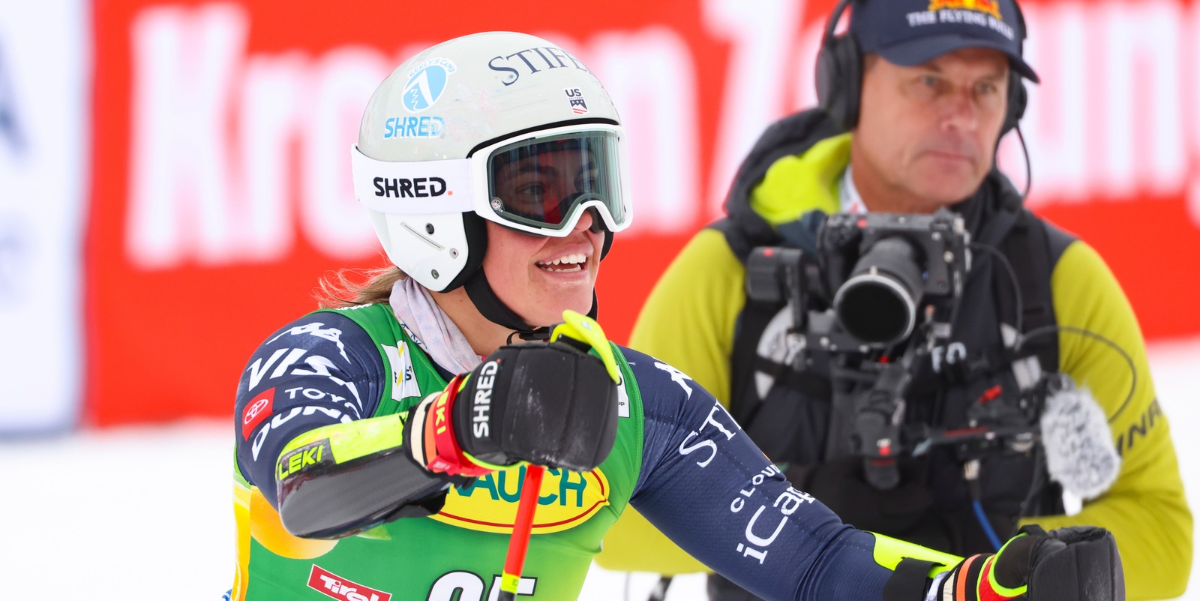
Katie Hensien Returns to Sölden With Unfinished Business

Katie Hensien, Sölden 2025, GEPA pictures
After an injury interrupted another promising World Cup season, the Stifel U.S. Ski Team veteran returns to the Rettenbach Glacier healthy, confident, and hungry for more.
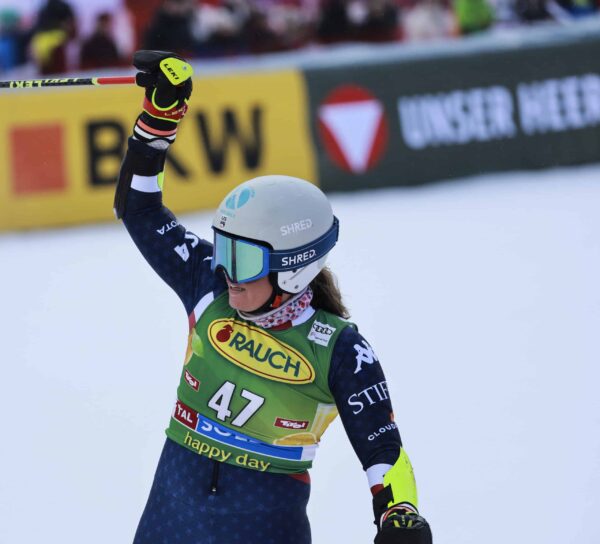
In October 2024, Katie Hensien pushed out of the starting gate at Sölden wearing bib 47. Two runs later, the American had finished fourth, just 0.03 seconds from her first World Cup podium.
It was the best World Cup result of her career, and it came after an entire season away from racing because of a knee injury.
Two years later, Hensien returns to the Rettenbach Glacier facing another challenge. An injury interrupted her 2025-26 season, pushing her farther back in the World Cup starting order. But the 26-year-old Stifel U.S. Ski Team veteran arrives in Austria feeling strong, confident and determined to build on what she has already accomplished.
“I feel great. I feel strong. I feel healthy. I feel good on my skis,” Hensien told Ski Racing Media ahead of the Oct. 24 World Cup opener.
Her message is clear: One difficult season will not define her career.
From a Sölden Breakthrough to the World Cup Finals
Hensien’s fourth-place finish at Sölden in 2024 marked a remarkable comeback. Starting 47th, she qualified for the second run in 17th place before producing the fastest second run of the race. She climbed 13 positions and narrowly missed the podium.
The performance provided compelling evidence that she could compete with the world’s best giant slalom racers.
She followed that breakthrough with the most consistent World Cup GS season of her career.
Hensien finished the 2024-25 season ranked 22nd in giant slalom with 97 World Cup points. Her results earned her a place at the Stifel Sun Valley Finals, a milestone reserved for the discipline’s leading racers.
Her competitive credentials extend well beyond the World Cup.
A graduate of Rowmark Ski Academy in Salt Lake City, Utah, Hensien went on to compete for the University of Denver. She became a two-time first-team All-American, won the 2022 NCAA slalom championship and finished second in giant slalom at those championships.
The former Denver Pioneer also represented the United States at the 2022 Olympics and has competed at multiple World Championships.
Those accomplishments established a foundation that another injury cannot erase.

Another Promising Season Interrupted
Hensien opened the 2025-26 World Cup season with another encouraging performance at Sölden, finishing 12th.
She had now completed both of her World Cup starts on the Rettenbach inside the top 15.
However, her momentum changed weeks later when she injured her tibia during November training in Levi, Finland. The injury disrupted her preparation, forced her to miss valuable competition time and complicated her Olympic season.
For an athlete who had already overcome a serious knee injury, another setback was difficult.
“Definitely kind of ran into some bad luck last year,” Hensien said.
Rather than dwell on the disappointment, she concentrated on regaining strength and rebuilding confidence.
That effort has left her optimistic.
“I’m feeling good. I’m hoping I can prove once again that I belong up there with those girls,” she said.
Hensien understands that training confidence must eventually translate into World Cup results.
“We’ll figure out on Saturday if I’m where I think I am.”
Stronger, Healthier and Focused on Consistency
Hensien’s preseason included extensive Southern Hemisphere training, although weather presented challenges for the American women.
Heavy snowfall interrupted the team’s recent camp in Portillo, Chile, shortly before the athletes traveled to Europe.
Despite the disruptions, Hensien believes her physical preparation has positioned her well for the season opener.
The Stifel U.S. Ski Team veteran, who uses SHRED protective equipment, has emphasized physical strength and the ability to produce fast skiing consistently.
Her primary technical objective is straightforward.
“I know I can make a really fast turn. It’s just doing that for 50 plus turns, right?”
For Hensien, the challenge is connecting those turns while generating speed and making the right tactical decisions as the terrain changes.
Consistency becomes especially important because last season’s interruption has affected her World Cup starting position.
She expects to open the season outside the top 30 in the giant slalom starting order, where changing course conditions can create additional challenges.
Nevertheless, Hensien believes the most important factor remains the quality of her skiing.
Her successful return in 2024 demonstrated that an unfavorable bib number does not prevent an exceptional result.
This time, she believes her skiing has improved.
Why the Rettenbach Glacier Suits Katie Hensien
Hensien has developed an impressive record at Sölden, but she initially struggled to explain why the Rettenbach suits her skiing.
“I don’t know what makes me successful on it,” she admitted.
Her explanation soon revealed an important element of her approach.
The Rettenbach requires athletes to adapt to three distinct sections, each demanding different technical and tactical decisions.
“I know our coach likes to talk about gear shifting,” she said.
The upper section requires an aggressive start. Racers must push hard and generate speed before approaching the steep pitch.
The middle section demands a different approach. Athletes must manage the sustained steep terrain without surrendering unnecessary speed. Hensien emphasized the importance of identifying where the course changes and adjusting her tactics accordingly.
Then comes the transition onto the lower flats, where carrying momentum toward the finish becomes critical.
For Hensien, success depends on recognizing those transitions and committing fully to each adjustment.
Course inspection becomes particularly important because the gate setting influences where an athlete can attack and where a more controlled approach may produce the fastest line.
Changing snow conditions add another variable, especially for later starters.
Although Hensien has enjoyed remarkable success on the Rettenbach, she believes she has yet to master the course.
“There’s still so much I can be better at, on this hill too,” she said.
“I don’t think I’ve perfected it at all.”
Her ambitions extend beyond another top-15 finish.
“I still haven’t won it yet and I want to win.”
Competition and Friendship Drive the American Women
Hensien also draws confidence from the increasingly talented Stifel U.S. Ski Team women’s technical group.
Established World Cup racers train alongside younger athletes eager to challenge them. The resulting competition raises the standard for everyone.
“First off, we’re just such a fun group,” Hensien said.
The athletes enjoy spending time together, but when training begins, their competitive instincts take over.
Everyone wants to ski fast. Everyone wants to win.
Hensien believes that combination creates an unusually productive environment.
Equally important is the support athletes provide one another during difficult training days.
When even an accomplished World Cup racer struggles to find a good feeling, hearing that a successful teammate is experiencing similar difficulties can help restore perspective.
“If we have a bad day, we all pick each other up,” she said.
The younger athletes bring additional energy and speed. Their progress challenges the veterans while reinforcing the strength of the American development system.
Hensien appreciates the opportunity to help establish a standard that emerging racers can aspire to reach.
“It’s nice to know that we’ve inspired those young girls to believe in themselves,” she said.
She also takes pride in having contributed to the American women’s Nations Cup success during the 2024-25 season.
The team’s accomplishments reinforce her belief that competition and cooperation can strengthen each other.

Sölden’s Special Energy and Unfinished Business
The first World Cup race carries an atmosphere unlike any other.
After months of preparation, athletes reunite with international competitors and friends. Everyone arrives with expectations, but nobody knows exactly how training performances will translate into race results.
Hensien enjoys the anticipation without allowing it to dictate her approach.
“I think a lot of people put a lot of pressure on the first race of the year,” she said.
She prefers to concentrate on her own skiing rather than add to the expectations surrounding the season opener.
The enormous crowds, the noise and the excitement of returning to competition make Sölden one of her favorite venues.
So does the international ski racing community.
During a recent walk through town with teammate Nina O’Brien, the two Americans encountered members of the Norwegian women’s team and stopped to catch up.
Those friendships reflect a side of World Cup racing that spectators rarely see. Athletes compete fiercely on the course while maintaining relationships built through years of shared experiences.
Hensien appreciates that balance.
Yet the reason she has returned to Sölden is unmistakable.
She wants to compete with the best, improve her World Cup ranking and continue pursuing the performances she knows she can produce.
“I’m super hungry for hopefully a fun and exciting year,” she said.
Her ambitions extend beyond giant slalom. Hensien also looks forward to returning to slalom racing and rebuilding momentum throughout the winter.
But first comes Sölden.
The Rettenbach is where she delivered the finest World Cup result of her career. It’s also where she believes there is still more speed to find.
After another difficult year, Hensien refuses to allow injuries to define what comes next.
She has already come within 0.03 seconds of a World Cup podium on this hill.
Now, healthy and determined, she’s ready to see how much further she can go.
About the Author: Peter Lange
Related Post